
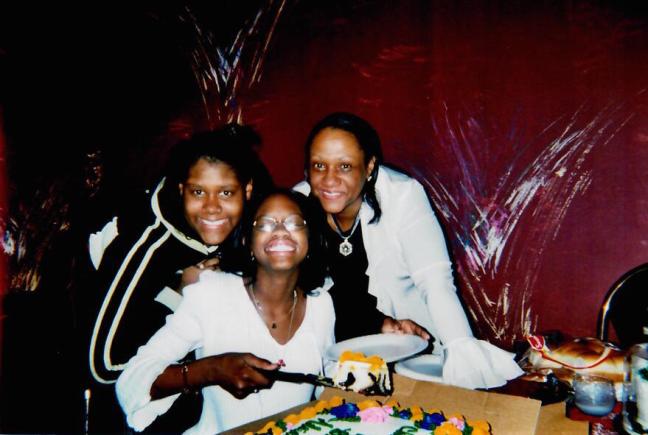
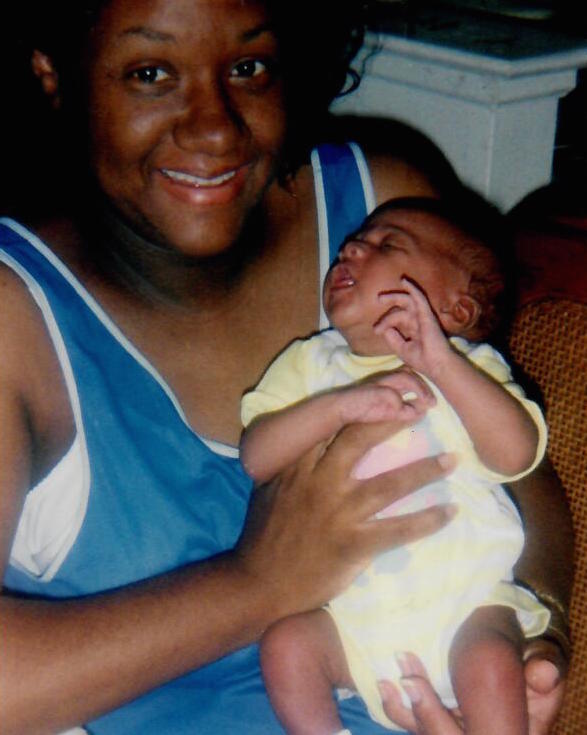
I like to think that when I was born, the nurse placed me in my mother’s arms and there I laid, nestled at her breast ever so comfortably. In my mind, I think about how my mother might’ve felt the first time she saw me; she saw all the hopes and dreams she had for my future. Like most mothers, I’m sure my mother envisioned that I would someday graduate college and make a difference in the world. Like most mothers, she probably envisioned that I would someday get married and have a family. Like my mother, I had my own hopes and dreams for myself. When I was a little black girl, I too hoped to one day get married with a big and beautiful wedding, yet I had no idea how much a wedding would cost. As I grew older, as I entered high school, I no longer wanted to be married with children. But, I wanted to be a world-renowned writer that would someday win an Oscar.
Later, as the years since high school carried on, I turned twenty-four years old and I soon felt as if the hopes and dreams my mother and I had for myself were no longer attainable. I was battling a serious bout of depression, which led me to be diagnosed with Bipolar II Disorder. However, because I am a black woman in a society that doesn’t see me or the importance of mental health, it is very difficult to envision a future for myself.
Before I was diagnosed with Bipolar II Disorder, I already knew that mental health in the African American community was already considered to be taboo. Most of the time, in the black community, what might be diagnosed as a mental disorder can sometimes be overlooked as “That nigga just crazy!” However, writing someone off as a “crazy nigga” isn’t always the best medical approach for one’s mental health, nor for others surrounding that person. I think like most people who have experienced violent bipolar episodes, they often get labeled as “crazy” by society. However, when you’re black and exhibiting violent behavior—which can usually be due to a lack of emotional stability and or a mental disorder—society usually labels us as “aggressive” and “hostile.” For many years, African Americans have been subjugated to violence—at the hands of a white patriarchal society—as normal. Black men and women are far too often raised in homes where they witness a parent being abused or they may’ve been abused themselves and through that experience of violence, they perceived violence as a way of life—that violence was to be expected. Although I wasn’t raised in a home where violence was normal, I still had a violent nature. As I reflect on my childhood, I am reminded that regardless of the environment we’re raised in, violence exists within all of us and we’re all capable of committing acts of violence.
My mother raised my sister and I in Brooklyn, New York, while my father lived in Norfolk, Virginia. Although my parents didn’t always get along, my parents did the best they could do to show how much my sister and I were loved. I wasn’t raised in a home where violence was normal and there were only a few times when my mother ever disciplined my sister and me by hand. When we were disciplined, it was usually done so with words. My mother had a way of talking to her children with love and respect, for she wanted us to understand why we were being disciplined. Although I never experienced an act of violence at the hands of my mother, there were many times when I subjected my sister to acts of violence by my hands. These abusive acts weren’t abusive in my mind at the time for I was only seven when this abusive behavior first began. But nevertheless, it was abuse.
As a child, there were two defining moments when my mother noticed that I was displaying symptoms of Bipolar Disorder. I might’ve been diagnosed earlier as a child and my sister might not have been subjected to the abuse she endured. When my sister was nine and I was about ten or eleven, we walked home from school and we talked about something simple, which led to an unnecessary debate, which then led to me taking her small head into my hands and throwing it against an iron gate.
On a Saturday morning, my sister and I were watching our usual Saturday morning television program together and then we got into yet another debate. This time it was over who was as physic as Raven from That’s So Raven. As she continued to tease me that she was more psychic than I, I picked up the fork I used to eat my usual Saturday morning chocolate chip waffles and thrusted it into her mouth.
Many times, when I would cause my sister harm, she would cry and because she rarely ever cried, I remember her sorrowful face―to this day―whenever she did. There were many times when my mother would come to her rescue as a child and there were many times when my mother wasn’t always around when harm came to my sister.

No longer a child that didn’t know they were being abusive, I was now twenty-three and for years, I had given myself permission to act out on my anger. My sister and I lived as roommates for a point and time, which only seemed natural because we were sisters and we also attended the same church. However, we soon found out that it wasn’t best to live together because she and I were not getting along and I was dealing with a serious bout of depression, but I didn’t know to call it depression at that time.
On one particular night, we attempted to be civilized to discuss terminating the lease because we weren’t getting along, but we were overcome with hostility and bitter words. My sister, who decided she no longer wanted to be a victim to my abusive taunts, decided to remove herself but I wouldn’t allow her to have the final word. So, I got off the couch and lunged at her with my fist and we began to fight like wild beasts. Although my sister was much smaller than me in height and weight, her blows were still very much as powerful as mine. In that moment, as she and I were fighting, I thought of my future and of the life I wanted for myself—to someday graduate college, to someday get married and to raise a family. But in that moment, I knew those things might not happen if I went to jail for physically assaulting my sister. I forced myself off her and shoved her out of the house. Most of that night seems like a blur and there aren’t many words that come to mind that I remember from that time. But the words that I do remember are these, “Thanks for abusing me, bitch!” My sister yelled those at me just as I was closing the door on her. From then on, our relationship has been nothing but bad blood.
It wasn’t long after that when the suicide attempts came and I found myself replaying childhood memories and all I could do was cry. After the fight with my sister, a friend allowed me to stay at her house after the fight. I laid on her blush beige rug with a knife beside me. I raised the knife to my wrist and I felt the soft blade caress my skin, but I didn’t press down to watch the red waters soak the rug. Instead, I called my mother and screamed into the phone and all she could tell me was to calm down so that the neighbors next door wouldn’t call the cops and that I might be sent to a mental hospital. My mother had a fear that I was going to end up in a mental hospital because she didn’t believe that anything was wrong with me.
As my mother put it, “Kyra, you’re just having a hard time in life right now. That’s all it is. All you need to do is pray. Hold on to God in this time. And you ain’t crazy. Your aunt—now, she crazy.”
It was moments like these that I didn’t feel like I was being heard by my mother about my depression or whatever was going on with me at the time. There were many times when the mature women at my church, with scripture and words of wisdom from their own previous experiences, tried to reason with me to receive medical help and to lean on God through scripture and prayer. But I didn’t want help and I didn’t want God at that time, so I chose to turn over to my sin of pride, malice and fits of rage.
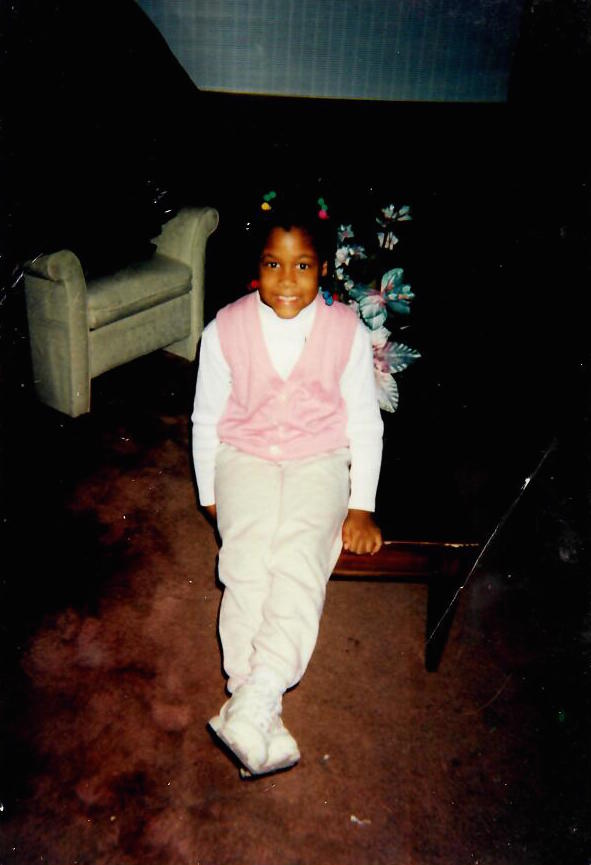
In the fall of 2016, I was yet again not in school and it didn’t take long for me to perpetuate another act of violence. But this time, it would be against my mother.
On a bitter cold December night, my mother and I got into a disagreement and I hung up the phone her. It wasn’t long after that she called me back and said, “Kyra, you are acting like an ungrateful bitch.”
I think it was use of the word “bitch” that made my skin crawl and the fact that it came from my mother simply broke my heart. Again, I hung up the phone on her and traveled to her house, knowing she might not be home by the time I got there. When I drove up to the house, I noticed the car wasn’t there, so I made my way into the house and began to throw her furniture all about the house. I went into her office and vandalized it. Then I thought I should wait patiently in the very nice office chair that was untouched. I heard the door open and she entered the house and made her way into her office and her eyes welled up with tears.
“Kyra, just go. Please just go,” she said, her voice wavering.
However, I would not leave and I began throwing her office belongings.
My mother shrugged her shoulders and said, “You need to call somebody because you gotta go. You can’t be here, baby. I don’t care where you go, but you gotta get on up outta here.”
As she exited the office, I followed behind her as she made her way into the kitchen to use the phone.
She grabbed the phone and said, “Here. Call one of the ladies at your church to come and help you because you need some help. I can’t help you right now, Kyra.”
I felt rejected by her, yet still entitled that she should still love me because I was her daughter. But here I was hurting her. She hung the phone up and made her way to the front door and held it open for me to exit. However, with suicide on my mind, I grabbed the knife from the drawer and ran over to her with the blade held ever so tightly to my wrist that I could almost feel the blade slice my skin.
My mother stood there with her back braced against the door and as tears rolled down my eyes, I said to her, “You don’t even care.”
She stood where she was and very calmly said, “You might think that I don’t care, but I’m fifty-five and I know that for you at twenty-three, you would like to think that’s the only answer”―she walked toward me and extended her hand for the knife―“but I know different.”
My mouth opened and released an overwhelming sob as I dropped the knife and fell to the floor and curled up like a baby. My mother closed the door and laid alongside me as I wept.
“I just wanna be left alone. I don’t wanna be a problem for you or anyone else anymore,” I said as I cried into the floor.
“You’re not my problem, Kyra,” my mother said.
That night, as I had done on many occasions as a little girl, I laid in my mother’s bed with her as she held me and talked to me ever so gently. As I laid there in the darkness of the night, I could not fathom the unconditional love that my mother had for her children, even as the two of us were no longer speaking after the fight. I could not fathom the love my mother had for me even though I had just destroyed her home—things that she had worked so hard for most of her life.
Throughout that year, my mother paid for my rent and my utilities, my groceries, to get my hair done and for brand new clothes. The truth was I didn’t deserve such acts of love and generosity from my mother and anyone that even dared to show me an act of kindness because I was selfish and entitled.
For many of us who have struggled and still struggle with mental health in a church setting, I know for a fact you have experienced a lot of shame and discomfort. However, I didn’t have a bad experience in my church when I was being diagnosed with Bipolar II Disorder. I had an experience that was very racially inclusive. I faced more judgement and persecution from African Americans outside of the church—by my mother, family, and friends.
A few helping hands were extended to me by my mother and two female leaders at my church, Georgia and Jean. As we sat down to discuss the series of violent events that took place over a span of a few months, Georgia, Jean and my mother were so patient, loving and gentle with me. At first, my mother addressed Georgia and Jean as we sat there and said, “Kyra, scared me the other night and I have never seen her display such behavior towards me like that before, but I want to make it clear that I will never give up on her. She could go and lead a life or prostitution and drugs, and I would never give up on her because I love my daughter.”
In that moment, I felt grateful that even though I had caused my mother such pain and heartache, God placed unconditional love inside of her heart for me.
After my mother spoke, Georgia—gently, yet still firm—said, “Kyra, your mother loves you so much and you should be grateful that you have a mother that cares for you so deeply because most mothers won’t tolerate what you’ve repeatedly done.”
As Georgia spoke, I couldn’t help but remain silent because I knew everything Georgia said was true. She turned to a scripture and read Matthew 26:52, which read, “‘Put your sword back in its place,’ Jesus said to him, ‘for all who draw the sword will die by the sword.’”
As she read the scripture, I was reminded of the phrase “violence begets violence.” I lived by violence for so long that I was unaware that I was spiritually dying because of my acts of violence.
“You’ve allowed yourself and people to take the place of God in your life for so long, as well as in your Christian walk these last three years. It’s selfishness, Kyra. People that have been given to you as gifts from God have been used and abused by your own hands and God will not stand for violence and hostility against His children, nor against Him,” Georgia said.

I considered going to counseling after that conversation, but I couldn’t muster up the courage to go through with it.
It wasn’t until Georgia and my campus ministry leader, Katy, sat down with me and gave me a loving ultimatum that gave me the push I needed to finally go to counseling and to receive psychiatric treatment.
Katy, in her soft voice said, “Kyra, although you haven’t had any violent outburst in quite a while, we still think it’s necessary that you seek help and this is it because how you process under stress isn’t normal and we really want better for you. However, this is it―you will have to get seek treatment.”
After Katy spoke, Georgia said, “Kyra, let’s look at 2 Corinthians 5:17, which reads, ‘Therefore, if anyone is in Christ, the new creation has come: The old has gone, the new is here!’ When Jesus died on the cross for you, He died for the sin—that sinful violence and rage and hostility that you evoked before and after you before a disciple of Christ. You, Katy and I have done nothing to deserve such merciful grace that has been bestowed upon us by God, for we were brought a price that we could not pay. Christ gave His life for us so that we may start a new life for Him.”
With the Bible and the mark of love that came with the fruits of the Spirit, Georgia restored me and helped me to see that I wasn’t living like a new creation, for I was still living like the old Kyra. I was set free from the bondage of sin when Christ died for me on the cross and yet, I was still living in the shackles of my own demons because I wasn’t making a conscious effort to deal with the deep-rooted issues in my life.
Although I hadn’t had a violent outburst for quite some time before Georgia and Katy spoke to me, I wasn’t sure that I might’ve not had another one had I not gone forth and began to seek counseling and psychiatric treatment for my bipolar disorder.
“Kyra, you are going to make it and when you begin to deal with your life with God, and through counseling and treatment, you will grow into the woman God desires you to be. As you grow older and you’re working, and once you get married and have children, you will remember this time and you will remember how far God has brought you,” Georgia said.

I made the decision to assume responsibility for my own life and go to counseling and to seek psychiatric help after that talk and I haven’t regretted that decision since. I didn’t understand why I was so angry and so violent for so long, but as I began to work through my emotions, I realized that I was a broken little girl that didn’t know how to communicate and to function like a twenty-four-year-old. I didn’t understand why I was so angry and so violent for so long, but as I began to receive psychiatric treatment, I was diagnosed with Bipolar II Disorder and I realized that I wasn’t crazy, but that I had some unique challenges that I would have to adjust to. But these challenges didn’t have to overcome me. With scriptures, counseling and medication, I have been able to live a life that is stable enough for me and I no longer must hold on to the idea that I am a big, black violent gorilla. But that I am fearfully and wonderfully made by God. 
Kyra Johnson
 BABL
BABL 