
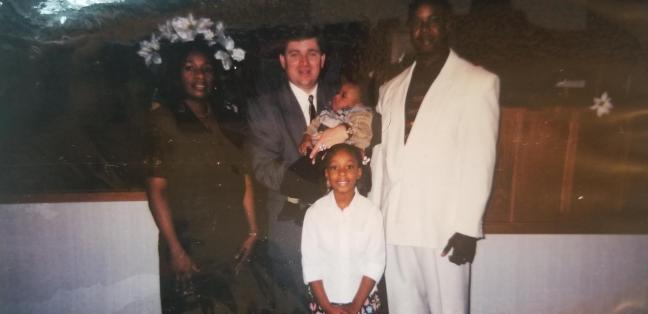
I was raised by two Jamaican parents.
You ever see these memes before?


Okay, cool.
So now that you understand what I was working with from the foreign parent end of things.
I’ll go ahead and mention one crucial detail — they were also Christians.
I don’t mean we went to church every now and then and mostly holidays — I mean Sunday mornings, Sunday evenings, Wednesday evenings and any other time that the church was hosting an event.
I didn’t mind growing up in the church. In fact, at times I downright loved it. I loved going to Bible study and learning about the Bible.
But what I did mind was the fact the church was whiter than Minnesota in the middle of a blizzard. That, and their unnecessarily legalistic interpretation of the Bible.
Any who, going to vacation Bible school and Bible summer camp were exciting and eventful trips that defined my summers and left me spiritually reset just in time for the start of a new school year.
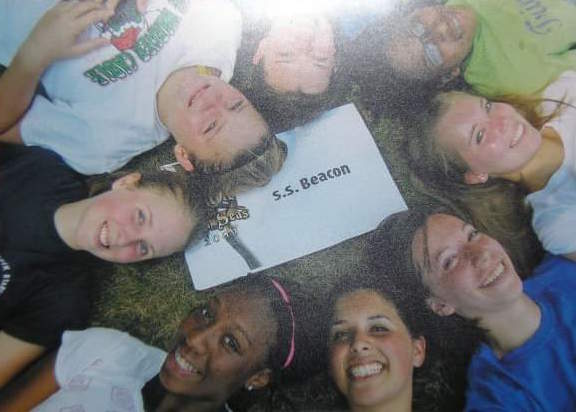
During the summer before I started high school, I made the choice to be spiritually born-again. Needless to say, I took God and the Bible very seriously.
My church always preached time and time again that the Bible was infallible and it was God’s guidebook for a spiritually pure life that God would be pleased with.
After the summer of my salvation and baptism, I was dedicated to becoming the best defender of the Bible and the best child of God I could be.
I wanted so badly to be righteous because I believed that following the Word would lead me out of the sin plaguing my life.
What sin might you ask?
Well, all the usual ones — I was disobedient and sometimes lied to my parents, I was mean to my brother, I didn’t follow the rules all the times, my room was messy and my parents thought I was lazy.
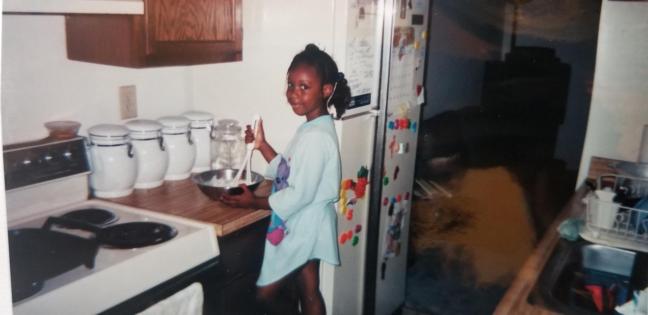
And there were sins I thought weren’t so usual like my love (LIKE REAL LOVE) of “secular” music, my fear of telling my non-religious friends about how to become a Christian and those pesky impure thoughts — yep sexual ones — lots of ‘em.
So I ramped up my dedication to being a Bible thumper and started going to youth group Wednesday night Bible study every single week. It was a spiritually and intellectually stimulating environment.
I’ll set the scene — Virginia, early 2000s, Southern free-will Baptist, fundamentalist, Bible beatin’, fire and brimstone church, hosted by some of the most animated, charismatic and attention-catching white male youth pastors Alabama ever churned out.
And I loved it.
They would preach to us about how to live a holy life as a teen and there was mostly some amazing truth in what they told us.
But then there were things that just didn’t sit right with my spirit — like when they would spend so much time telling the girls not to wear pants and to not have short hair because the former would tempt our brothers in Christ to sexually sin and the latter did not align with the biblical Proverbs 31 woman, just to name a few (trust me there are so many more).
So now that you know what my worldview was for my formative years. I’m sure it comes as no surprise I struggled tremendously with shame.
Shame defined me.

I would go home and my strict Christian, Jamaican parents would shame me. I would go to church and I would leave feeling unworthy and filled with shame.
I constantly felt like I would never be the child my parents demanded and I was frustrated I couldn’t will myself to be a good Christian teenage girl. I just felt so hopeless.
So I began to have straight up, no b******t conversations with God.
“Okay God, I know you said ‘thou shalt obey your parents,’ but what if your parents are for real wildin’ sometimes and are low-key emotionally abusive at times?
“How am I supposed to rationalize listening blindly to everything my parents tell me when I feel like they don’t always see me as an individual? They often see me as an extension of themselves that they get to control.
“Okay God, I know you said no sex before marriage, but my parents are divorced and you said that was a sin too. Also, there are so many divorced people at church and they’re remarried so they’re having sex with someone who’s not their original spouse.
“Okay God, I know you said to be a modest Proverbs 31 woman, but why’d you make me a curvy black girl with a love for fashion if you wanted me to wear three-feet skirts all day?
“Okay God, I know you said not to love the things of this world, but then why’d you go and make me Jamaican? You know I can’t resist a good rhythm and beat!
“Okay God, I know you said that we’re all created equally in your image, but then why is my church and so many other churches racially segregated?”
I needed answers.
I needed answers to my totally valid questions to God, but I also needed answers to why I felt like I couldn’t trust what the many authority figures and structures in my life had to say about my life and society.
Interestingly, I found those answers in psychology.
While attending college at Virginia Commonwealth University (Go Rams!), I was a psychology major with a minor in gender, sexuality and women’s studies.
I took Bible classes about the Old & New Testament and women in the Bible.
I worked two years in a research lab doing community-based research with disenfranchised populations.
Oh, I’ve also lived through two years of the 45th president of the USA.
The last six years — from my senior year of high school until now — has reshaped my faith tremendously.
My classes, my research and a fresh perspective on life have put me on a spiritual journey I never expected.
However, the journey was unclear at times. I wrestled with God during my undergraduate studies.
I was learning about psychological phenomenon and theories that had explanations for any and everything including the often misogynistic, racist and homophobic elements of the Christian religion.
I went to my doctor and found out I had undiagnosed and untreated ADHD, which helped me make sense of all of my “lazy” and disorganized behaviors that infuriated my parents.
I discovered Christian feminism and learned about different interpretations of scriptures about women’s role in the church. I also learned about how the church’s patriarchal gaze had placed an emphasis on policing women’s bodies & their sexuality.
I began to see the church was bipartisan and did not always stand for justice and equity for marginalized groups, as Jesus would have us to.
All the while, I knew my faith in God was real, but I just felt I couldn’t be the Christian I was supposed to be if following the right theology meant aligning myself with the ideals I felt to be problematic.
I felt it was irrational for me to subscribe to all these legalistic requirements and respectability politics and I felt that measuring my faith by those standards drew me away from my walk with the Lord.
Nonetheless, I was the Creator’s child and so I yearned for a relationship with Jesus. I would visit different churches for weeks at a time and still feel hopeless.
The churches were good placeholders for my internalized religiosity, but ultimately, they didn’t tap into my soul’s need for a personal and unique relationship with Christ.
The churches were either not multi-ethnic enough, or they would have theology that did not align with what I felt Jesus wanted me to do, or they upheld viewpoints or rituals I felt were unnecessary to an edifying relationship with Jesus.
Sometime after graduation, I started my first post-grad job administering an evidence-based intervention to low-income black students in my community.
I was heartbroken at how few resources these students had and I knew that although they were battling various social, emotional and psychological challenges, they were also battling systemic corruption and injustice. This ultimately contributed to poor life outcomes for themselves and their communities.

Around the same time I started my job, I was introduced to a church plant called Center Church located in Richmond, VA.
I met with the pastor of Center Church and he told me about the vision he felt God was calling him to.
He emphasized placing women and people of color in leadership positions in the church, acknowledging and addressing social justice and community service, practicing racial reconciliation in the city and boosting education and literacy in marginalized ethnic minority communities. He believed Jesus called the church to be an intentional community for fostering transforming personal and communal relationships with Jesus.
I remember going home after meeting with him and crying, laughing and rejoicing to God because He had finally brought me to a spiritual community that shared the same values as me and interpreted the Bible in a way that seemed appropriate considering my knowledge of biblical history and psychological and sociological phenomenon.
Fellowshipping, worshipping and studying the Bible with my new church affirmed God wanted me to use my passion for psychology and social justice to create real and lasting change for the kingdom. I began to understand who Jesus really was and tap into parts of myself I was afraid to show Jesus, even though he knew they existed all along — He created me with these unique traits.
Suddenly, I felt my relationship with Christ coming to life in an authentic way.
Eventually, God led me to pursue a career in mental health. Now, I’m in my first year of a clinical child psychology doctoral program.

In this program, I’m working on an after-school mentoring intervention in the southside of Chicago. The intervention uses a youth anxiety curriculum that has been culturally adapted and integrated with tools for advocacy and empowerment to offset the effects of living in chronically stressful and violent communities and to empower the youth who endure these environments to be change makers.
I am now devoted to community-based psychology that empowers ethnic minority youth and their families.
I am specifically interested in helping black female adolescents advocate for themselves and practice positive coping mechanisms predicting positive mental, physical and spiritual health outcomes.
I’m also interested in equipping parents, clinicians, practitioners and community organizations (like churches), with social and psychological education to increase their self-efficacy in raising, treating, teaching and providing resources to black female youth.
I am grateful to God for my spiritual journey.
God allowed me to doubt, question and even spend some time living by my own understanding in order to help me see my faith was real.
I’ve developed a relationship with Jesus I never knew was possible and I found a church community that taught me how to be the church Jesus intended.
The Creator allowed me to see how He is the author of science and how He designed our brains to emphasize how each and every one of us is uniquely equipped to serve the world in our own way, with different challenges and strengths.
I spend my days searching the Word with new eyes, seeking out truths on how to use my knowledge and expertise to make the world a place which embodies the kingdom of God.
I’ve made peace with chasing perfection and realize the symptoms of humanity are exactly why Jesus came to be our Savior, and there is nothing we can do to make it so He stops loving us.
I no longer play the “shame game” in understanding my role as a child of God and in doing so, I’ve been able to minister to non-believers so much more confidently and effectively.
I hope to spend the rest of my life communicating and evoking the truth and love of Jesus to the world through everything I do. I pray everyone can experience this all encompassing shalom and love on their faith journey.
Chantelle Miller
Contributing Writer
 BABL
BABL 